For most of my life, I’ve lived in a body that doesn’t always cooperate. Chronic illness and chronic pain have been my baseline for so long that I learned to minimize it. I told myself the same things doctors, friends, and even my own inner critic echoed: It’s not that bad. Other people have it worse.
It could be cancer.
That phrase became my perverted version of resilience. A mantra. A way to grit my teeth through symptoms that were dismissed as “normal,” even when they were anything but. My illnesses primarily affect my mental health and reproductive system, and because the average person experiences a version of what I go through, it became an unspoken (often one-sided) competition in the oppression Olympics of pain… Who has it worse. Who gets to complain. Who deserves care.
For years, the medical advice I received boiled down to two options: get knocked up or learn to live with it. So, I learned to live with it. I pushed through. I adapted. I canceled plans and felt the sting of friends who didn’t understand, who thought I was being flaky or dramatic. But every missed outing felt like a small betrayal not just of them, but of myself. I often worried that if I didn’t keep pushing, I’d lose my people. So, I kept going. I’d go out, often over drinking to numb my physical and mental pain. Trying to rally and find outfits suitable to conceal belly bloat and diapers to look cute for a day-long DC brunch event. Minimizing my responses when friends asked, “how are you?” down to “doing ok, work is crazy” or ‘I’m fine” for fear of always feeling like I’m complaining.
And then last September, everything shifted.
Three days after my sixth surgery, someone I love; someone who has always championed my well-being, someone integral to the story of my life was diagnosed with cancer. One day we were talking about weekend plans; the next, their body had turned against them in a way that was sudden, violent, and terrifying.
Suddenly, the phrase “at least it’s not cancer” wasn’t a coping mechanism. It was a stark reality staring me in the face.
Watching them navigate fear, treatment, uncertainty, and the betrayal of their own body cracked something open in me. I know what it feels like when your body refuses to cooperate, when you beg it to just hold on or behave or let you live normally for once. That familiarity pulled me into support mode allowing me to offer strength, encouragement, and reminders to rest, to breathe, to savor the present moment because none of us know how many more we get.
But in showing up for them, I had to confront a question I’ve avoided for years:
Why do I believe everyone deserves care, rest, and compassion… but me?
Why do I treat my own suffering as something to be minimized? Why do I feel the need to push myself to the limits to “earn” love and compassion from friends. Why do I only allow myself empathy if my pain reaches some imaginary threshold of legitimacy?
Why do I feel like my life’s value only has meaning measured against someone else’s tragedy?
That question has lingered with me, uncomfortable and a bit revealing. My friend’s diagnosis didn’t just shake my world; it forced me to reevaluate the way I’ve been living in my own body. It made me realize that waiting for a crisis to justify caring for myself is not resilience. Its self-neglect dressed up as toughness.
Their journey so far has taught me something I wish I learned long ago:
You don’t need a catastrophic diagnosis to deserve care.
You don’t need to be the sickest person in the room to rest.
You don’t need to minimize your pain to make others comfortable.
I’m still learning how to internalize this and turn this into actionable daily practices. Renegotiating how I chose to show up for myself and let friends show up for me. Being more intentional with my health.
And maybe that’s the quiet gift hidden inside all this fear and grief…the gentle reminder that our bodies, even when they’re difficult, are still worth tending to. That our lives, even when busy and messy, are still worth living fully. That we don’t have to wait for something worse to happen before we finally choose ourselves.
And am I thankful for the friends that do get it, and that show up for me when I let them… and those that are trying but fighting their own hidden fights. I hope I provide the caring space for them; I’m striving to create for myself.
PS. Sorry if this is wordy or flows weirdly…someone was cutting onions while I was typing.
P.S.S I take back my sorry …enjoy this for what it is.
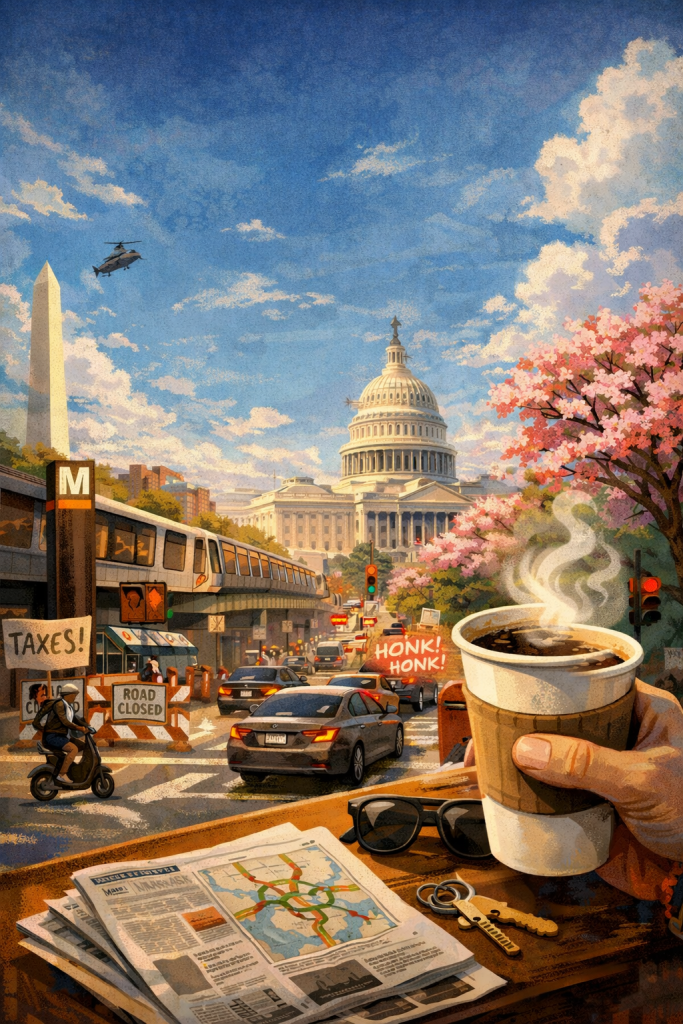
 Coffee, Chaos & Capital Views